
Last updated November 23, 2026
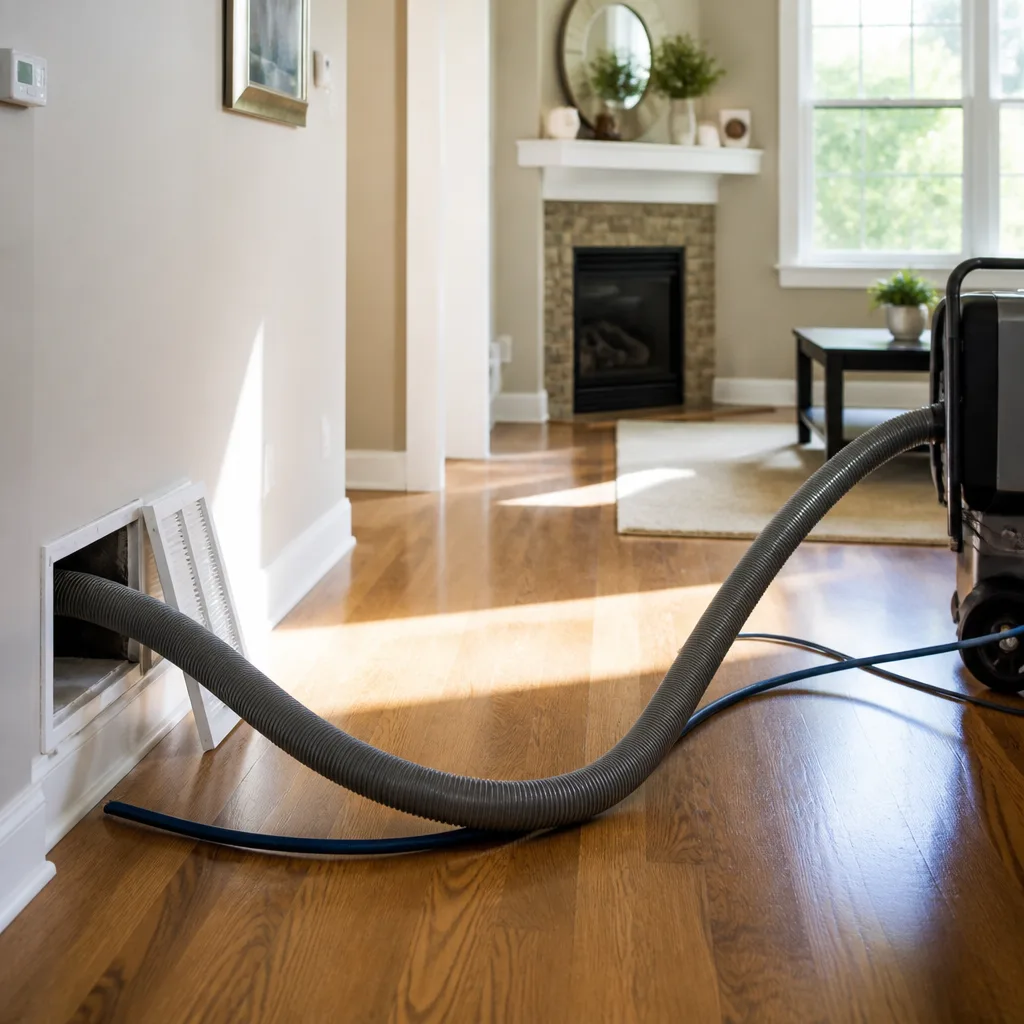 Whole-home duct cleaning
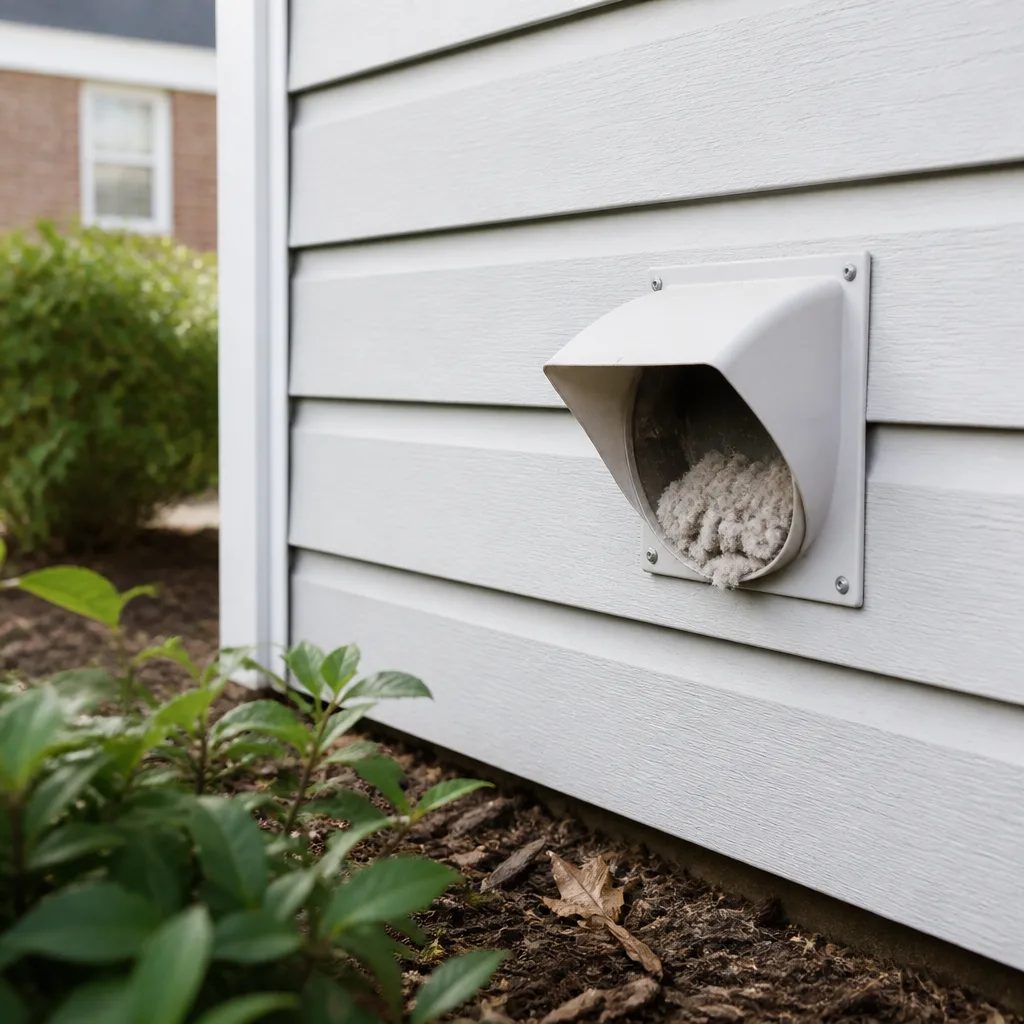 Dryer vent cleaning
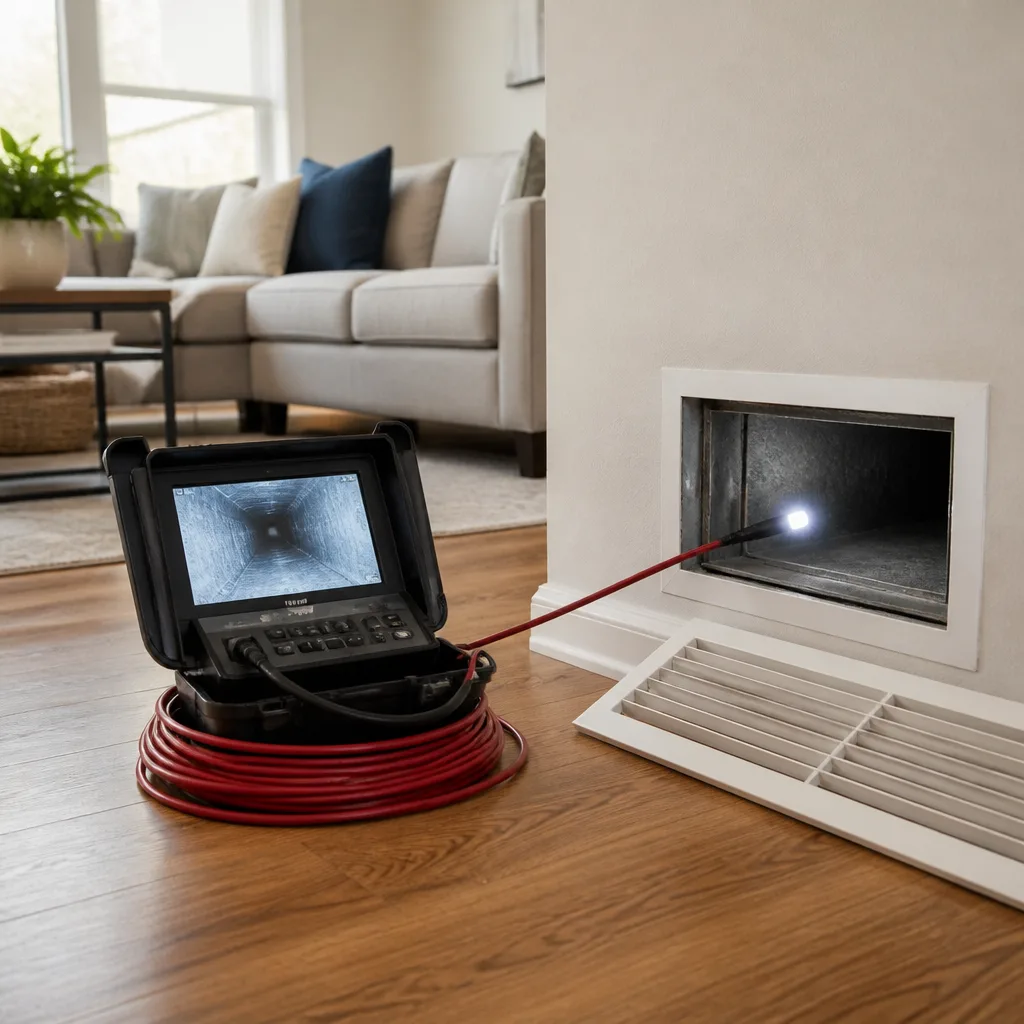 Camera inspection
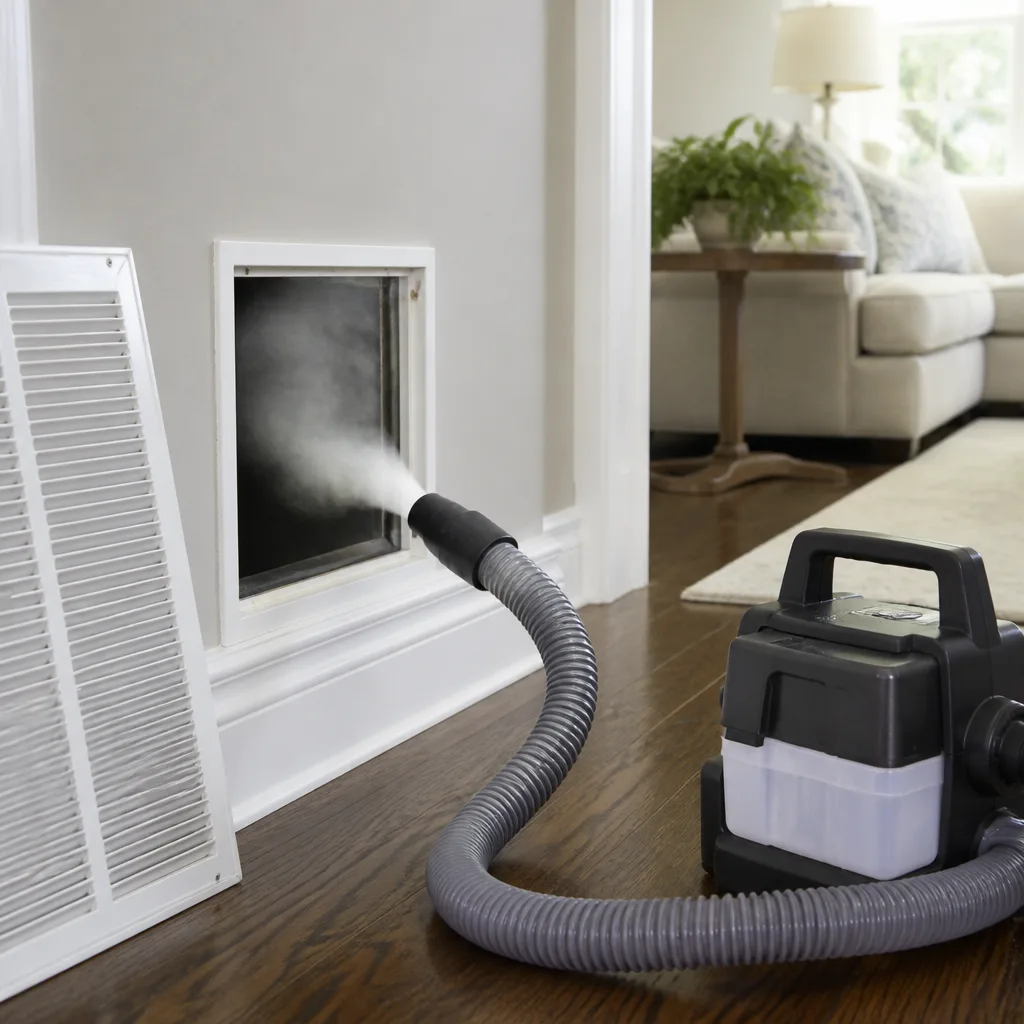 Sanitizing & deodorizing
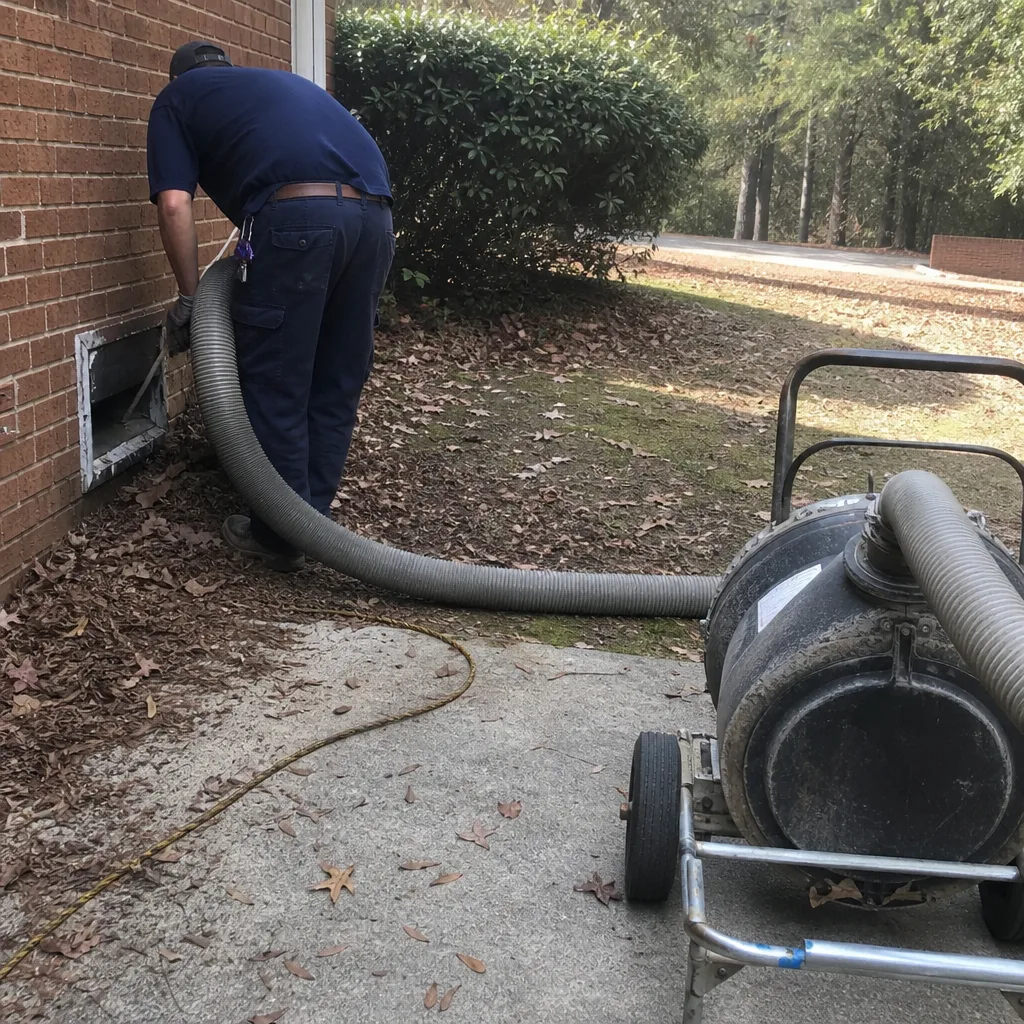
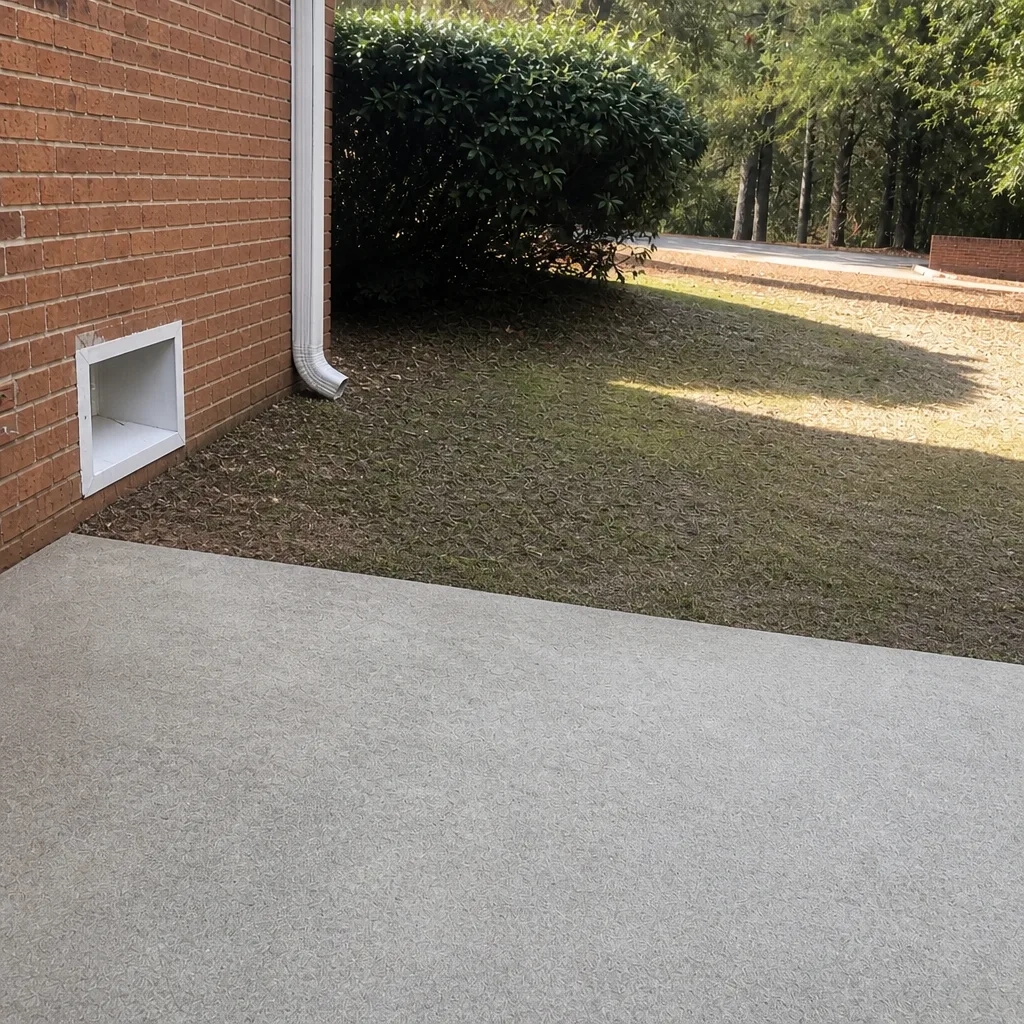
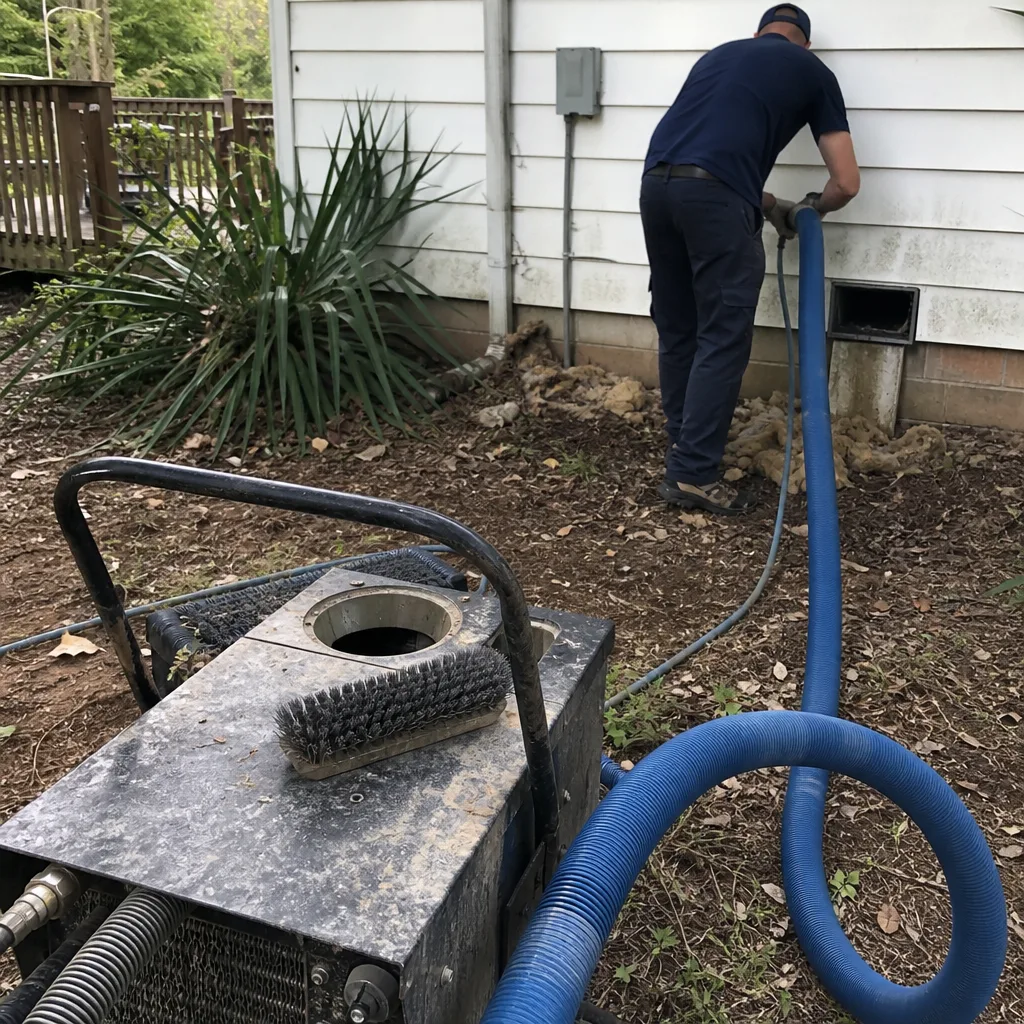
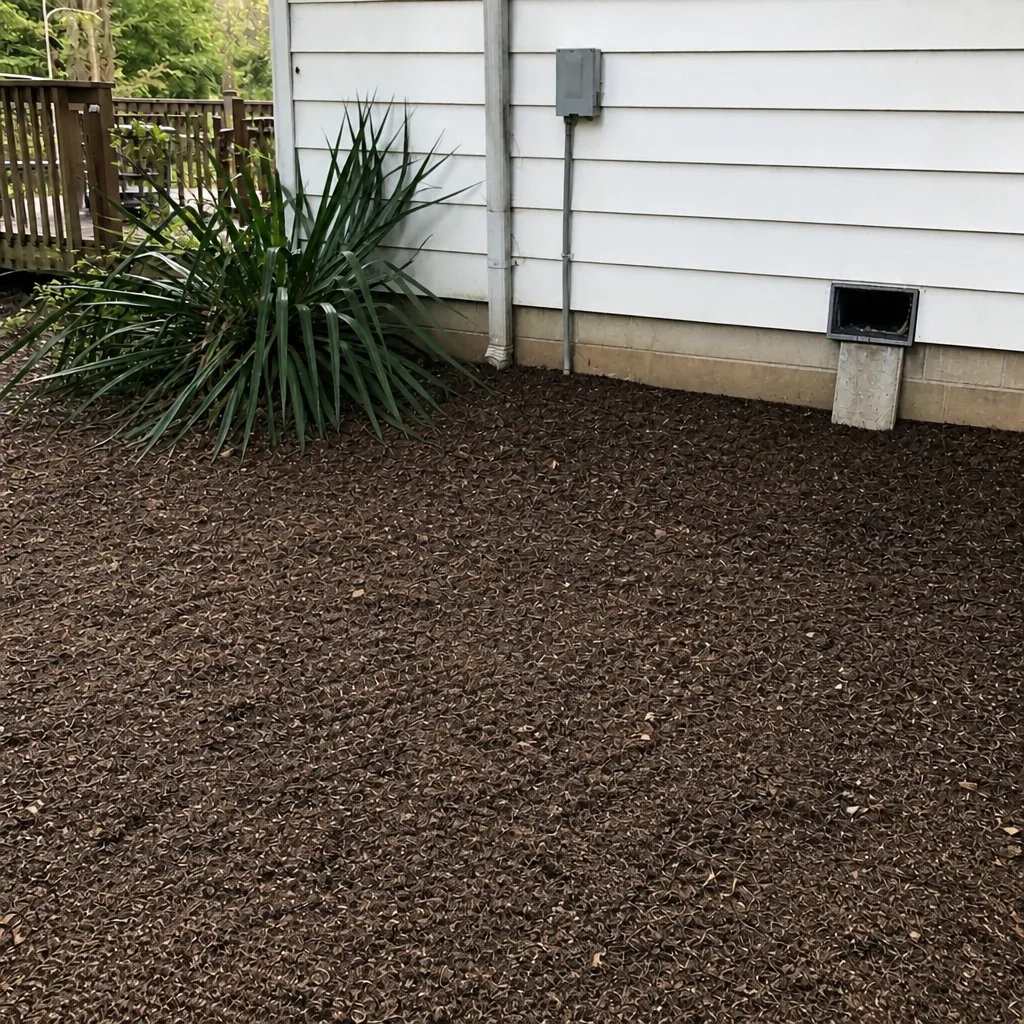
Whole-system duct and dryer vent check with before-and-after photos - you see exactly what came out of your vents
That "$99 whole-house special" is a bait ad - the real number appears once they are in your hallway, or the "clean" is a shop-vac at the register. We photograph the inside of your ducts before and after instead.
DIY vs Professional Air Duct Cleaning: The Wakefield Homeowner’s Decision Guide
Here’s a number that surprises most people: a homeowner with a shop-vac and a $30 dryer-vent brush kit can reach roughly the first 18 inches of each supply and return register. In a typical Wakefield ranch or two-story, that’s less than 5% of the total interior duct surface area. The rest sits behind drywall, under subfloor, and inside trunk lines that consumer equipment physically cannot pull debris from. This guide isn’t here to tell you DIY is foolish. Some of it is genuinely useful, and we’ll show you exactly which parts. What you’ll learn is where the accessible fraction ends, why a shop-vac can’t do a pro job even with the right brush, and how to use a simple DIY pre-inspection to get more out of a professional visit.
Styles & brands we work with
- Whole-home duct cleaning
- Dryer vent cleaning
- Camera inspection
- Sanitizing & deodorizing
Quick Answer
DIY air duct cleaning is worth doing for register grilles, filter changes, and clearing a dryer vent, but it cannot clean the trunk lines, blower wheel, or evaporator coil where most contamination collects. In most Wakefield homes, a full-system professional cleaning with negative-air containment is the only way to remove debris from the buried sections of the ductwork without spreading it into your living space.
Table of Contents
- What Consumer Duct Cleaning Kits Actually Do
- Why a Shop-Vac Can’t Match Professional Negative Pressure
- Tasks You Can Legitimately Do Yourself
- Where DIY Stops and Professional Equipment Begins
- The Risk of Partial Cleaning
- How to Run a DIY Pre-Inspection Before You Call
- What Wakefield Homes and Climate Add to the Equation
- DIY vs Professional: An Honest Cost Comparison
- Common Mistakes to Avoid
- When to Call a Professional
- Frequently Asked Questions
- The Bottom Line
What Consumer Duct Cleaning Kits Actually Do
A consumer duct cleaning kit typically includes a flexible whip or brush head that attaches to a drill or shop-vac hose, plus a small vacuum attachment. Mechanically, these tools do one thing well: they agitate the surface they touch. A spinning brush head scrubs dust and light debris off the interior walls of the duct section it can reach. The vacuum then pulls loosened material toward the hose opening.
That works on the first 12 to 18 inches behind a register. It does not work further in, for two reasons. First, the whip loses rigidity with every foot of extension, so it flops against the duct walls instead of scrubbing them. Second, and more important, those tools only address the duct branch you can reach through the register. The trunk line, the plenum above the air handler, and the return chase behind your wall are entirely separate cavities the brush never enters.
Consumer kits also lack containment. When a drill-mounted brush spins inside a duct, it aerosolizes dust and fine debris. Without negative pressure pulling that dust out of the system, it drifts back through the nearest open register and into the room. Cleaning a system in Wakefield this way can leave the air hazier for a day or two than it was before you started.
Where kits shine: register grilles removed and washed in a sink, accessible flex duct joints that need re-taping, and a dryer vent run you can reach from the exterior hood. Those are real wins. We’re not here to talk you out of them.
Why a Shop-Vac Can’t Match Professional Negative Pressure
The physics matter here, and they’re the reason a good shop-vac still isn’t a duct cleaning machine. A shop-vac moves a large volume of air through a short, wide hose. Duct systems are the opposite: long runs, tight turns, and a wide cross-section at the trunk. A shop-vac at the register pulls air from the room behind it far more easily than it pulls debris from 30 feet down a trunk line. The path of least resistance wins, and that path is the room, not the duct.
Professional setups work differently. A rotary brush system drives a mechanical brush through the full length of a branch and into the trunk, then retracts while the vacuum pulls. A negative-air machine connects to the main trunk or plenum and depressurizes the entire system, so every open register draws air inward. Debris loosened anywhere in the ductwork gets pulled toward the collection point instead of drifting into rooms.
That’s the practical difference between a consumer cleanup and what we bring to a Wakefield job: a Rotobrush rotary brush system for mechanical agitation, paired with Nikro negative-air equipment that keeps loosened material contained rather than recirculated. Abatement Technologies HEPA equipment goes into the mix on jobs where allergen or mold concerns mean containment needs to be tighter than standard. Same principle in all three cases: pull the whole system negative, then agitate.
You can’t recreate that with a shop-vac. You’d need CFM at a static pressure no consumer unit produces, plus a way to seal every other opening in the system so the vacuum draws through the duct, not the room.
Tasks You Can Legitimately Do Yourself
Several duct-related maintenance tasks are reasonable for a Wakefield homeowner with basic tools. Doing them well keeps your system cleaner between professional visits and can make a technician’s job easier when they do arrive.
- Register and grille cleaning. Remove supply and return grilles with a screwdriver, wash them in a utility sink with dish soap, dry them, and reinstall. In Wakefield homes running AC from May through September, dust and pollen coat grilles quickly, so a twice-a-year wash is a reasonable rhythm.
- Filter replacement. Change your HVAC filter on the schedule your equipment calls for. A clogged filter starves airflow and pushes dust back into the system. Write the install date on the filter edge with a marker so you don’t have to remember.
- Dryer vent clearing. Disconnect the dryer, pull the flexible connector, and clear the short run to the wall. From outside, remove the exterior hood and reach in with a vent brush to clear lint. This one matters for safety as much as efficiency: lint buildup in a dryer vent is a fire risk. For longer runs, hidden elbows, or a vent that snakes through a wall cavity, a professional dryer vent cleaning reaches what a hand brush cannot.
- Accessible flex duct reconnection. If an uninsulated or insulated flex run has slipped off a takeoff in an open basement or crawlspace, re-securing it with proper foil tape (not cloth duct tape) is within reach of a careful homeowner.
- Return-air path inspection. A flashlight and a hand mirror let you look into accessible registers, into the return drop at the air handler, and along exposed basement trunk lines. You can spot clogging, torn duct liner, or disconnected sections without any special equipment.
What ties these tasks together is visibility. You can see the surface you’re cleaning. Inside a sealed trunk line, you can’t, and that’s where the DIY line sits.
Where DIY Stops and Professional Equipment Begins
Four jobs in a residential duct system require equipment a homeowner doesn’t own and shouldn’t improvise. Each sits on the air pathway between your return grille and your supply registers.
- Main trunk lines. A trunk can run 20 to 40 feet through a Wakefield crawlspace or between floors, with branches inside it. Reaching the far end requires a rotary brush on a powered feed, plus negative air at the collection end. A shop-vac attaché never gets there.
- Blower wheel cleaning. The blower wheel inside the air handler accumulates a thick, sticky coating of dust that reduces airflow and can unbalance the wheel. Removing and cleaning it properly means pulling the blower assembly, which isn’t a homeowner task on most equipment and risks damage to the motor or wheel if handled wrong.
- Air handler coil rinsing. The evaporator coil sits wet for months in Wakefield’s humid summers, and a damp coil is a magnet for dust, pollen, and biological growth. Rinsing it correctly requires the right cleaner, containment, and a way to catch runoff without soaking the cabinet or the surrounding space. That’s part of a proper HVAC cleaning.
- Sealed duct systems. Many Wakefield homes have ductwork sealed with mastic at every joint, or wrapped in insulation inside a chase. You can’t pull a register and reach into a sealed system. It has to be accessed and cleaned with tools designed for the job, and resealed afterward so the cleaned system stays clean.
One thing often missed: cleaning without sealing leaves leaks. A duct system that leaks 20% of its air into a crawlspace pulls dust and crawlspace air back in at the return. Cleaning a leaky system only cleans it until the leaks recontaminate it. That’s why we pair cleaning with duct repair and sealing, and why the phrase “cleaned and sealed” carries real meaning. The repair closes the loop that a cleaning-only job leaves open.
For a full picture of what a diagnostic-to-resolution cleaning covers on the whole system, see air duct cleaning.
The Risk of Partial Cleaning
Disturbing duct debris without proper containment can make indoor air temporarily worse. That’s not theory, and it’s not a scare tactic. When a brush or compressed air loosens settled dust inside a duct and there’s no negative pressure pulling it toward a collection point, the fine particles go airborne. Some drift out of nearby registers. Some land on the coil and blower where they combine with moisture and attach. Some just resettle in a different part of the system.
This is why a partial DIY cleaning of the first foot of every branch isn’t a smaller version of a professional job. It’s a different job with a different risk profile. You’re moving debris out of a place you can see and into places you can’t.
When professional handling matters most:
- Anyone in the household has asthma, allergies, or a respiratory condition.
- The home had recent renovation work, and drywall dust or sawdust may be in the returns.
- There’s visible mold growth at a register or on the air handler cabinet.
- You notice a musty smell coming from any supply vent.
- The home is older and the duct system has never been cleaned.
In each of these cases, containment equipment matters more than the cleaning itself. That’s what Abatement Technologies HEPA equipment provides: it keeps loosened material captured rather than letting it redistribute into the home. If you suspect mold, don’t disturb the ducting; call a professional who can assess and contain the situation.
How to Run a DIY Pre-Inspection Before You Call
A careful pre-inspection can make a professional visit faster and more focused. You’re not doing the technician’s diagnostic for them; you’re gathering the details they’d otherwise spend time finding. You’ll want a flashlight, a hand mirror, a screwdriver, and a notepad or phone for photos.
- Photograph every register. Supply and return, with the grille off. Note which ones look heaviest. Dust patterns differ by room, and return grilles usually show the most.
- Use the mirror at accessible branches. Where a register lets you see the duct interior, hold the mirror at an angle and check for debris buildup, torn liner, or visible moisture.
- Look at the air handler. With the unit off and the panel removed only if you’re comfortable doing so, check the filter slot for grit, the blower area for dust coating, and the cabinet for rust or water staining. If you’re not sure how to open it safely, leave it closed and photograph the exterior.
- Trace the return. Note where the main return joins the air handler. If it passes through a crawlspace or attic, look at it from outside the duct. Sagging flex, crushed runs, or disconnected sections are common in Wakefield homes with finished attics or older crawlspaces.
- Note the system type and ductwork material. Rigid metal, flex, or a mix. Ductboard. Where the trunk sits. This tells the technician what equipment to bring.
- Write down symptoms. “Master bedroom return smells musty after AC has run a while.” “Dust on furniture comes back within a week of cleaning.” “Kids’ allergies worsen when the heat runs.” Specific symptoms point a technician toward the right part of the system.
None of this replaces a professional inspection. What it does is turn a general “clean my ducts” call into a targeted request. A technician who knows to check a specific return in a specific room skips the exploratory phase and gets to work faster. In our experience, a well-briefed job runs more efficiently and stays closer to the estimate.
What Wakefield Homes and Climate Add to the Equation
Duct systems in this part of North Carolina deal with a specific set of conditions, and those conditions change the DIY vs professional calculus in ways a generic national guide won’t tell you.
Long, humid summers. From May through September, Wakefield homes run air conditioning nearly continuously. A wet evaporator coil is a fine environment for biological growth, and a system that sits wet for months accumulates more inside the air handler than a system in a drier climate. Coil and blower cleaning isn’t optional maintenance here; it’s the part of the system most likely to develop a problem.
A pollen-heavy spring. The pine and oak pollen season here coats everything, including return grilles and the filter housing. Homeowners who run a decent filter through March and April get a real benefit, and register cleaning earns its keep.
Mixed housing stock. Wakefield’s neighborhoods mix newer construction with homes old enough to have original ductwork, and the duct systems differ accordingly. Newer builds often use long flex runs through attic chases; older homes tend to have trunk-and-branch metal systems in crawlspaces or between floors. A flex system needs a gentler touch, because a stiff brush can tear the liner. Metal trunks tolerate more aggressive mechanical cleaning but often leak at taped joints. Either way, the technician needs to see what’s there before choosing tools.
Crawlspace humidity. Many Wakefield-area homes have duct trunks in crawlspaces, and crawlspace humidity is high in summer. Duct insulation that’s absorbed moisture loses effectiveness and can grow biological material. Sealing and insulating the trunk properly addresses both efficiency and air quality. A cleaning without a look at the crawlspace trunk leaves half the answer on the table.
The practical upshot: a Wakefield homeowner with a shop-vac can keep registers and filters clean, and that’s productive. But the parts of the duct system most affected by this climate – coil, blower, crawlspace trunk, sealed plenum – are the parts DIY doesn’t reach.
DIY vs Professional: An Honest Cost Comparison
DIY sits in the tens of dollars for tools and materials. A professional full-system cleaning is priced per job based on the size and complexity of the system, and the written estimate sets the final price. It’s not a flat number you can compare to a $30 drill attachment on a spreadsheet. What you’re paying for is reach, containment, and the equipment that makes both possible.
- DIY register and filter maintenance: minimal cost, genuinely useful, do it yourself.
- DIY dryer vent clearing (short, accessible run): minimal cost, useful, watch for long or hidden runs.
- Professional full-system cleaning: priced per job after a walkthrough, includes trunk lines, blower, coil as scoped, and containment equipment.
- Professional duct repair and sealing: priced per job, closes leaks that recontaminate a cleaned system.
- Professional dryer vent cleaning (long or hidden run): priced per job, worth it for safety where the run isn’t accessible.
We’re not going to quote a coupon figure and then expand the scope on site. What we’ll do is walk the system, tell you what’s reachable and what isn’t, and give you a written estimate that covers the whole job. If you clean the registers yourself first, tell us – it makes the estimate more accurate and keeps the line items honest.
For a whole-home view of the services above, see Wakefield Air Duct Cleaning Pros.
Common Mistakes to Avoid
- Running a drill brush through every register and calling it done. This loosens dust without capturing it, and in a Wakefield home running AC all summer, that dust lands on the coil. You can end up worse off than when you started.
- Using a leaf blower on ductwork. It’s a real temptation and a real mistake. A leaf blower pressurizes the system and blows debris into every branch, the coil, and eventually into rooms. There’s no containment, and there’s no way to undo it without a professional cleaning.
- Cloth duct tape on flex duct joints. The name is confusing, and the tape fails. Foil tape with a proper mastic seal is what holds; cloth tape dries and peels within a season or two, and the joint starts leaking again.
- Skipping the crawlspace trunk. In Wakefield homes with ducting under the floor, the trunk in the crawlspace is often the single most contaminated part of the system and the easiest to ignore because you don’t see it.
- Cleaning without sealing. A cleaned duct system with leaks pulls dust back in from the crawlspace or attic. Cleaning alone is a partial fix, and in our experience, it’s the most common reason a homeowner calls back a year later saying “it didn’t stick.”
- Doing a partial clean when someone in the house has asthma. Disturbing debris without containment raises airborne particulates temporarily. If anyone in the home is sensitive, this matters.
- Ignoring the dryer vent because it “still works.” A dryer that takes longer to dry a load is a signal, not a quirk. Lint buildup in the vent is a fire risk, and long or hidden runs in Wakefield homes should be checked by someone with the tools to reach the whole length.
When to Call a Professional
Call a professional when the problem isn’t visible from a register. That includes a coil or blower that’s never been cleaned, a crawlspace trunk showing moisture or biological growth, a return that smells musty after the AC has run, and a duct system that’s never been cleaned in a home you recently purchased. Call also if you’ve finished a renovation and drywall dust is likely sitting in the returns, or if anyone in the home has respiratory concerns. Ductwork that’s been cleaned but never sealed is worth a look, because leaks recontaminate quickly. Wakefield Air Duct Cleaning Pros offers free estimates in Wakefield. Call (866) 947-9162. We answer 24/7. Fast dispatch from 7am to 7pm, Sunday through Friday.
Frequently Asked Questions
You can clean the first foot or so behind each register, plus the grilles, filters, and an accessible dryer vent, but you cannot reach the trunk lines, blower wheel, or evaporator coil with consumer tools. In a typical Wakefield home, that accessible portion is less than 5% of total duct surface area, so a DIY clean is useful maintenance, not a full cleaning. Call (866) 947-9162 for an exact quote on the rest of the system – estimates are free.
A very low quote usually covers a limited scope: registers and the first foot of branch duct, without negative-air containment, without blower or coil cleaning, and often without a written scope before work begins. The price looks good until the technician is on site and the invoice grows. We quote per system after a walkthrough, with one flat price per system agreed before work starts, and before-and-after photos of your own ducts so you can see the scope you paid for.
Not dangerous in the way electrical panel work is, but it does carry a real risk of redistributing debris. A drill-mounted brush without containment aerosolizes dust and can push it into rooms and onto the coil. A leaf blower on a duct system is the worst version of this. The safer path for anything beyond the register is containment equipment and a technician trained on it.
For most Wakefield homes running AC through a humid summer, a full-system cleaning every few years is reasonable, with register and filter maintenance in between. Homes with pets, recent renovation, a smoker, or allergy concerns need it more often. There’s no universal number; a walkthrough tells you more than a calendar does. Call (866) 947-9162 for an exact quote – estimates are free.
Ask for before-and-after photos of your own ductwork, not stock images. A professional cleaning includes containment, so you should be able to see the inside of a trunk line or the coil before and after. We hand those photos to the homeowner. That’s also the standard we’d hold any contractor to: if the scope isn’t documented, ask why.
After, but seal off the ducts during the work if you can. Drywall dust and sawdust settle in returns and branches, and cleaning after the dust has settled removes it in one pass. If the renovation is still ongoing, ask the crew to cover registers with plastic and tape, and schedule the cleaning once the dust has stopped. Call (866) 947-9162 for an exact quote – estimates are free.
The Bottom Line
DIY air duct cleaning isn’t dangerous or pointless, but it addresses only the accessible fraction of the system. Register cleaning, filter changes, short dryer vent clearing, and accessible flex duct repair are worth doing yourself. The trunk lines, blower wheel, coil, and sealed duct systems need professional equipment, and in a Wakefield climate running AC through a humid summer, those are exactly the parts that matter most. Use a DIY pre-inspection to brief the technician and keep the visit focused. Then let a professional handle what you can’t reach, and seal the system afterward so the clean job stays clean.
Wakefield Air Duct Cleaning Pros covers the full air pathway: duct cleaning, dryer vent cleaning, HVAC cleaning, air quality and sanitizing, and duct repair and sealing. Our technicians have up to 9 years of experience, and we work with professional-grade Rotobrush, Nikro, Honeywell, Aprilaire, and Abatement Technologies equipment. One flat price per system, agreed before work starts, with before-and-after photos of your own ducts. Call (866) 947-9162 for a free estimate. We answer 24/7. Fast dispatch from 7am to 7pm, Sunday through Friday.
Written by the team at Wakefield Air Duct Cleaning Pros.
See the difference
 Before
 After
 Before
 After
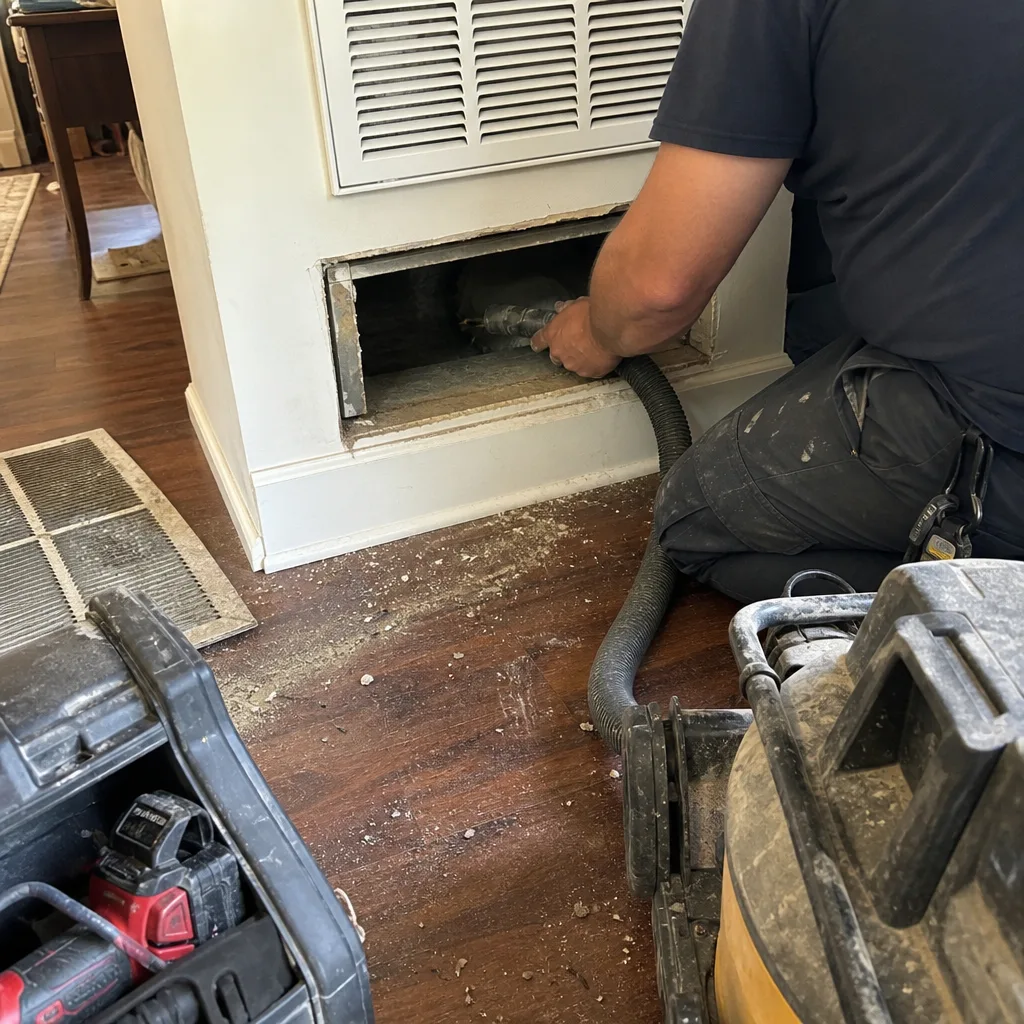 Before
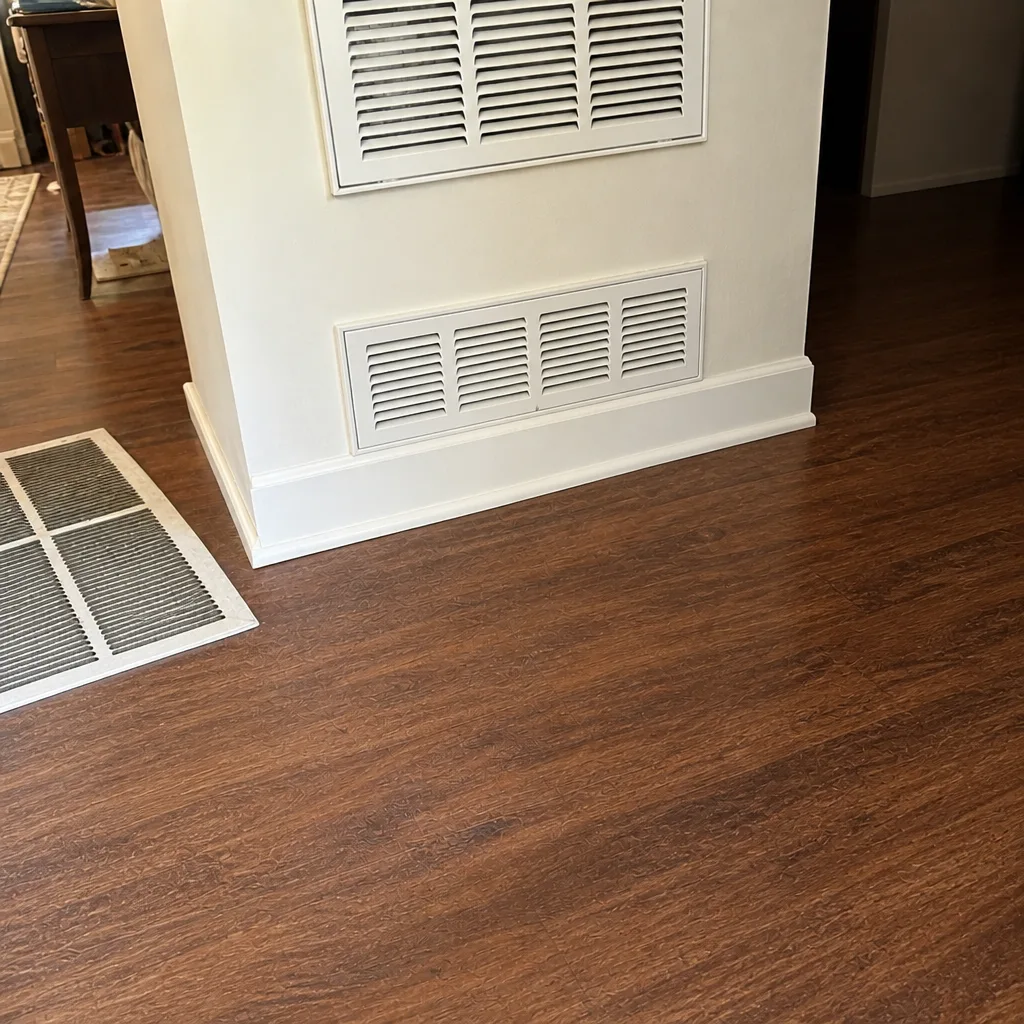 After