
Last updated November 23, 2026
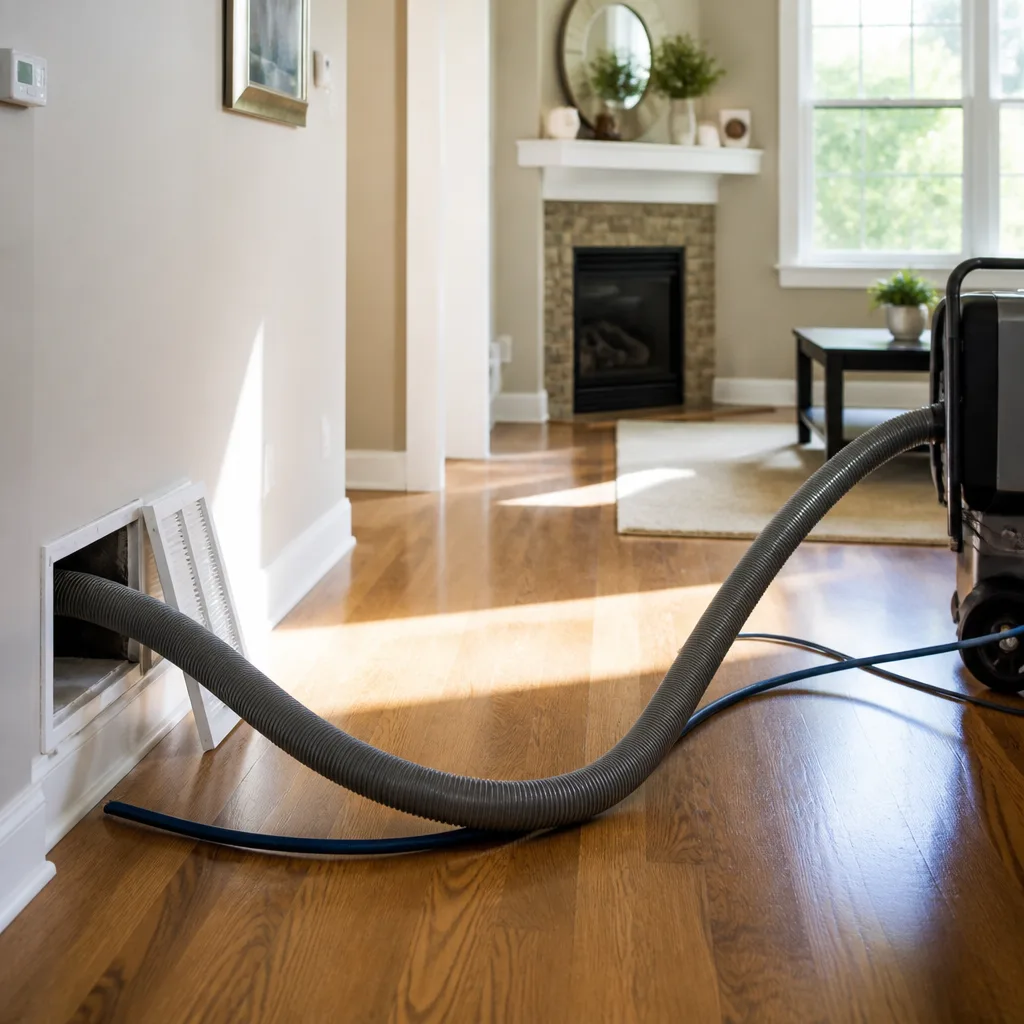 Whole-home duct cleaning
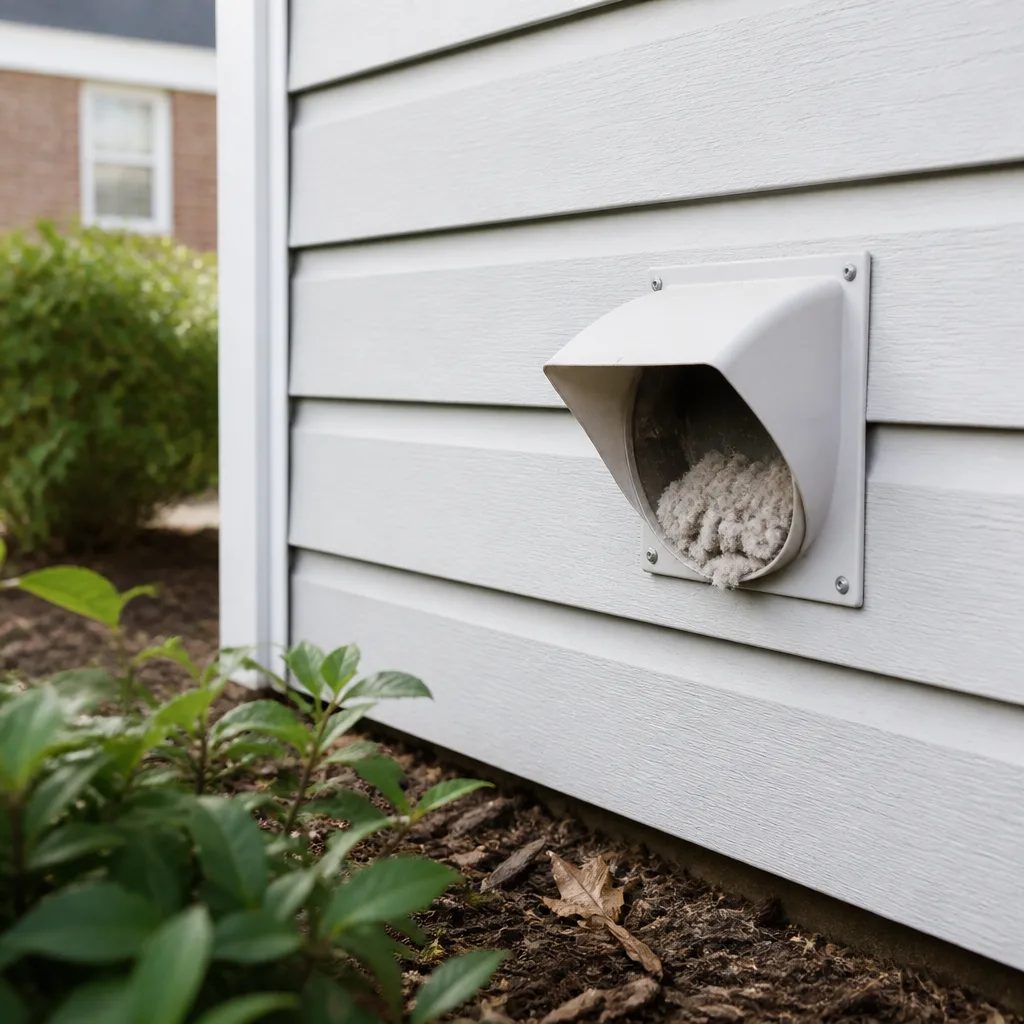 Dryer vent cleaning
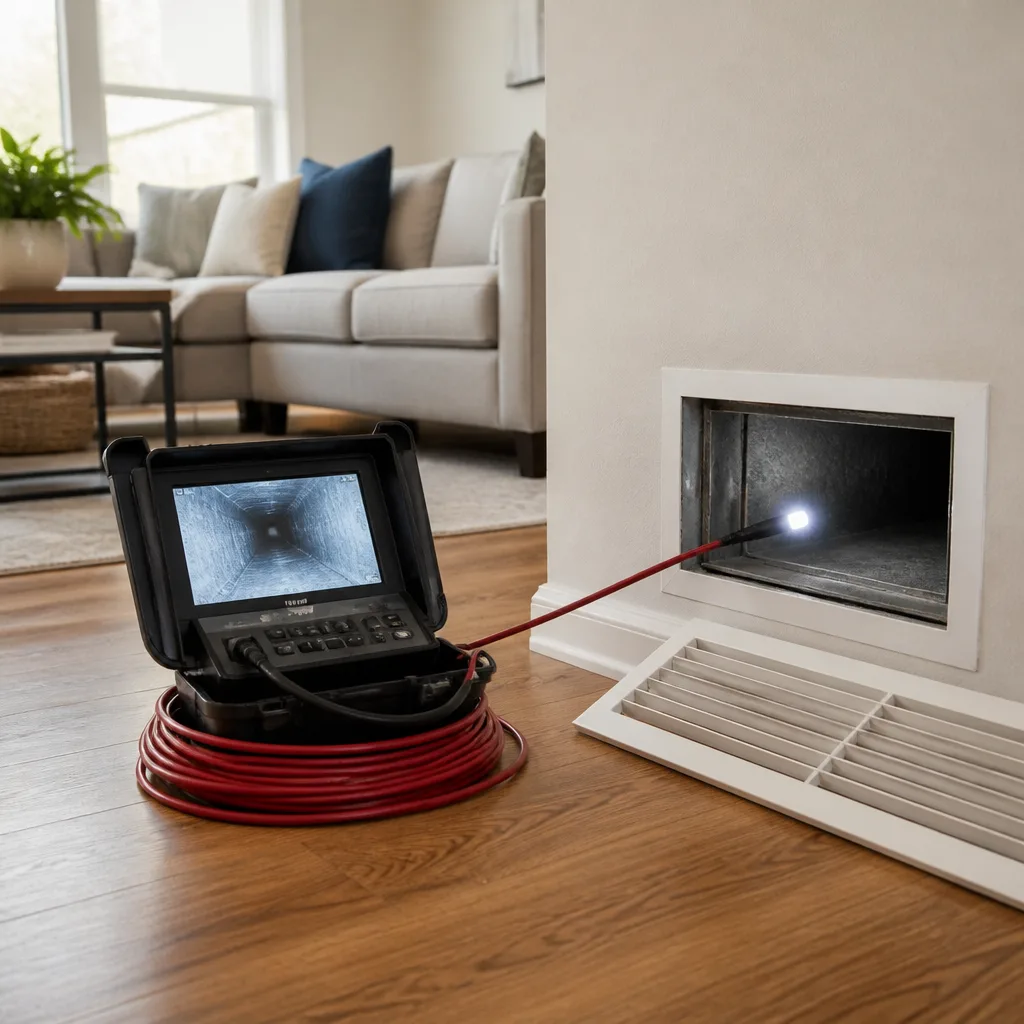 Camera inspection
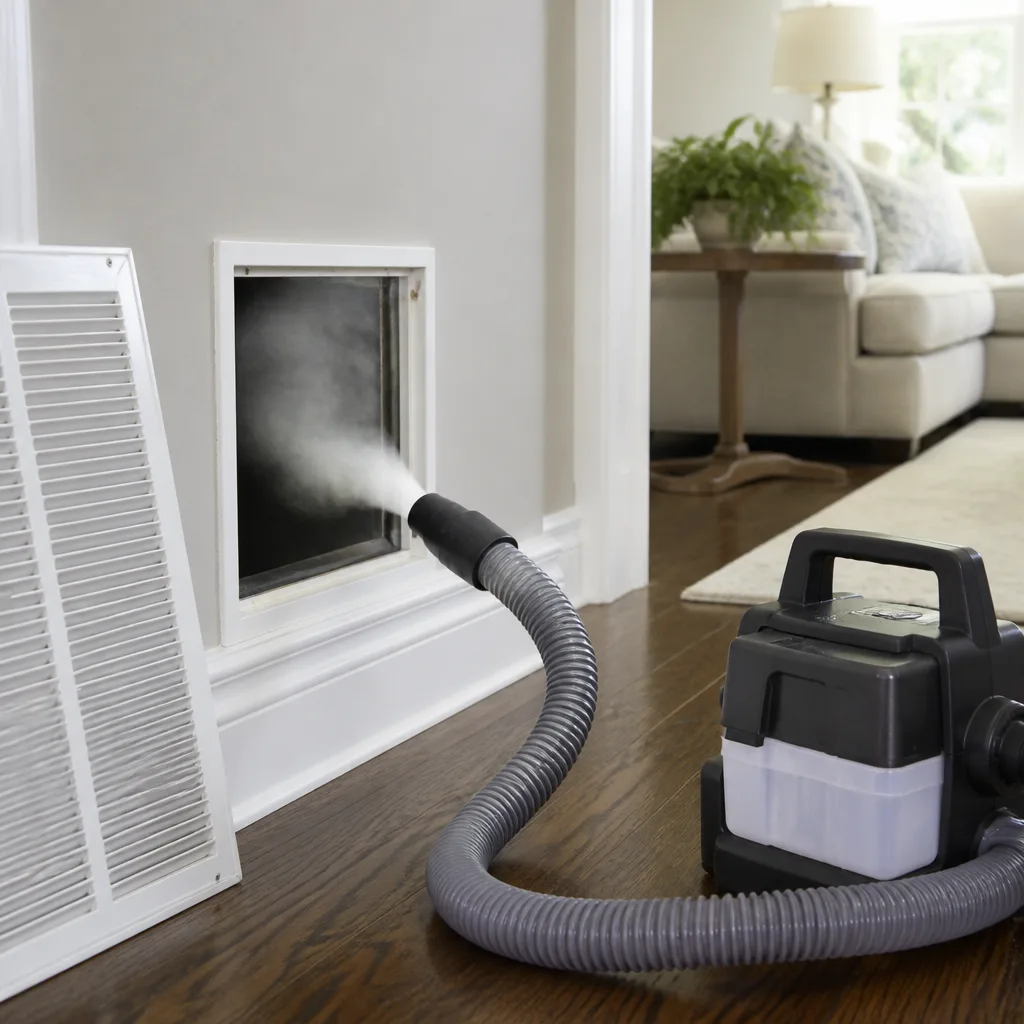 Sanitizing & deodorizing
Whole-system duct and dryer vent check with before-and-after photos - you see exactly what came out of your vents
That "$99 whole-house special" is a bait ad - the real number appears once they are in your hallway, or the "clean" is a shop-vac at the register. We photograph the inside of your ducts before and after instead.
The Complete Guide to Air Duct Cleaning in Wakefield
Most people judge their ducts by what they can see. The register grille looks fine, maybe a little dusty at the slots, so the system gets filed under “probably okay.” What that view misses is the trunk line behind the wall: a long, dark run of metal or flex duct where debris settles out of the airflow and stays put, sometimes for years. A vacuum wand dragged across the vent face never touches it. This guide is about the whole air pathway instead of the visible edge of it, from the return intake through the air handler and out to every supply register in a Wakefield home. We’ll cover how the job actually works, what to ask before you book it, how to read the paperwork afterward, and where cleaning stops and repair begins.
Quick Answer
Air duct cleaning in Wakefield is a whole-system process, not a vent-by-vent wipe-down. A proper job uses negative air pressure and mechanical agitation to pull debris out of the entire duct run while containing it, then documents what came out. In Wakefield, the right scope depends heavily on the home: newer builds tend to carry construction debris, while older retrofits often carry biological buildup inside flex duct that no surface cleaning reaches.
Styles & brands we work with
- Whole-home duct cleaning
- Dryer vent cleaning
- Camera inspection
- Sanitizing & deodorizing
Table of Contents
- Why Wakefield Homes Have Different Debris Profiles
- What a Full-System Scope Actually Includes
- Negative Air Pressure: The Principle That Makes It Work
- What the Cleaning Process Looks Like, Step by Step
- How to Read a Post-Cleaning Report
- Cleaning Alone Isn’t Enough: Repair and Sealing
- One-Time Cleaning vs. an IAQ Baseline
- Common Mistakes to Avoid
Why Wakefield Homes Have Different Debris Profiles
Two houses on the same Wakefield street can need completely different work, and the reason usually isn’t the homeowner. It’s the construction era and how the HVAC was installed. The town’s housing stock spans new subdivisions and older homes that have had their systems retrofitted, replaced, or extended piece by piece. Each path leaves its own signature inside the ducts.
A newer Wakefield home tends to present a drywall-dust profile. Construction generates fine gypsum and joint compound particulate that drifts into every open register during the build, and much of it settles in the trunk lines before the system ever runs a full season. It’s light, powdery, and easy to stir back into the air supply if the system is only surface-cleaned.
Older Wakefield homes, especially those with flex-duct runs added during a retrofit, tend toward a different profile. Flex duct has a corrugated interior that traps debris in its ridges, holds moisture longer, and gives biological growth a place to establish. Once that happens, brushing the vent face does nothing, because the material is anchored to the duct wall a dozen feet upstream.
Our technicians have up to 9 years of experience reading these differences on site, and it shapes the equipment choice before any work starts:
- Newer construction: heavy fine particulate, so containment and HEPA filtration matter more than aggressive agitation.
- Older flex-duct retrofits: anchored biological material, so mechanical agitation with a rotary brush system is required to break it loose before extraction.
- Post-renovation homes: a mix of both, often concentrated near the returns where dust was pulled during the project.
- Homes with a recent HVAC replacement: debris from the swap sitting in trunk lines, sometimes with the old system’s residue still in place.
That’s why a phone quote based on square footage alone tells you almost nothing. The profile of what’s inside the system is the thing that determines scope.
What a Full-System Scope Actually Includes
The phrase “air duct cleaning” gets used loosely. In our view it should mean the complete air pathway, and the ducts are only part of that pathway. A system-wide scope starts at the return intake, moves through the air handler cabinet, and ends at each supply register. Skip any component and the cleaned sections get re-contaminated the first time the blower runs.
Here’s what the full scope covers beyond the duct runs themselves:
- The air handler cabinet. The metal box housing the blower and coil collects dust on every interior surface. If it isn’t cleaned, it releases particulate straight into the supply side.
- The blower wheel. Dust builds unevenly on the blades, which unbalances the wheel and reduces airflow. A dirty blower is a common reason a system feels weak even when the ducts are clear.
- The drain pan and condensate area. Standing moisture plus dust is where biological growth starts in a cooling system. Inspecting and cleaning this area is part of the job, not an add-on.
- The return intake and plenum. The entry point takes the heaviest load, especially in homes where a filter has been run past its change interval.
- Every supply trunk and branch. Each run gets agitated and extracted, not just the registers you can reach from the floor.
- The registers and grilles themselves. Removed, cleaned, and reinstalled.
This is where HVAC cleaning overlaps with duct work, and why we treat them as one scope rather than two line items. Cleaning the ducts but leaving the air handler dirty is a half-finished job that shows up again within a season.
If your home also has a clothes dryer venting into a wall, that’s a separate air pathway with its own fire risk and its own cleaning need. We handle it as part of the same visit when the schedule allows. You can read more about that side of the work on our dryer vent cleaning page.
Negative Air Pressure: The Principle That Makes It Work
Here’s the mechanical idea that separates professional cleaning from contact cleaning, and it’s worth understanding before you hire anyone. When a technician brushes or vacuums the inside of a duct without controlling the air in that duct, loosened debris goes airborne and follows the path of least resistance. That path is often back into the living space through the nearest register. The cleaning process then adds particulate to the air instead of removing it.
Negative air pressure solves this. A high-volume vacuum unit connects to the duct system and pulls the entire run into a state of lower pressure than the room around it. Air flows toward the vacuum, not away from it. Debris agitated off the duct wall gets carried into the collection unit instead of drifting into the house.
Containment is the other half. Professional equipment uses HEPA-level filtration so the air leaving the vacuum unit is cleaner than the air entering it. On the equipment side, that’s what Nikro negative-air units and Abatement Technologies HEPA equipment are built to do, and it’s the standard we hold to on every job in Wakefield. It matters most in homes with asthma, allergies, or any concern about mold, because the last thing those households need is a cleaning process that aerosolizes the very material they’re trying to remove.
Contact cleaning, by contrast, is what a shop vac and a brush attachment at the register face amounts to. It removes what’s within reach of the wand. It cannot move the settled debris in a trunk line twenty feet away, and it can’t contain what it does loosen. You can see the difference in the collection unit afterward, and in the report.
What the Cleaning Process Looks Like, Step by Step
A full-system cleaning in a Wakefield home follows a predictable sequence. The steps don’t change much from house to house; what changes is the intensity applied to each one based on what the inspection finds.
- Walk-through and system audit. We map the returns, supplies, and air handler location, note the duct material (metal, flex, or a mix), and check the filter and blower condition. This is where the debris profile gets identified.
- Set up containment. The vacuum unit connects to the system to establish negative pressure. Floor protection goes down, and any open registers not being worked are sealed so the pressure holds.
- Mechanical agitation. A rotary brush system is fed through each duct run, breaking settled debris off the walls. The brush platform we run is the Rotobrush system, the same type of equipment used by commercial restoration contractors. Corrugated flex duct gets particular attention because of how it traps material.
- Extraction. While the brush works, the vacuum pulls the loosened debris out of the system into the collection unit. This is the step where negative pressure earns its keep.
- Air handler and blower cleaning. The cabinet interior, blower wheel, and drain pan area get cleaned separately once the duct runs are clear.
- Register cleaning and reinstall. Grilles come off, get washed, and go back on.
- Post-cleaning inspection and documentation. The system is checked visually and photographed, and the findings go into a written report.
Most homes are finished in a single visit. Larger systems or heavily contaminated flex-duct runs can take longer, and we’ll tell you up front if that’s the case. You can see how this applies to a standard residential job on our air duct cleaning page.
How to Read a Post-Cleaning Report
A report is only worth something if it shows you what was found and what was done, in a form you can check. Anyone can hand over a receipt that says “duct cleaning completed.” That tells you a transaction happened, not that the work did. Here’s what a useful report contains:
- On the findings side: which components were inspected, what condition each was in, and any areas that showed damage, moisture, or biological growth.
- On the work side: which duct runs were cleaned, whether the air handler and blower were included, and what method was used on each section.
- Photographic evidence: before and after images of the interior of the ducts and of the collection unit. This is the single most useful item on the page, because it’s the one thing you can look at and judge for yourself.
- Recommendations: anything that needs attention beyond cleaning, such as a duct run that should be sealed, a filter housing that needs repair, or a flex run that’s collapsing.
Ask for the photos of your own system, not stock images. If a company can’t show you what came out of your ducts, the report is decoration. This is one of the reasons we build before-and-after documentation into every job in Wakefield. A one-time cleaning without proof of what was removed leaves you guessing whether anything happened at all.
Cleaning Alone Isn’t Enough: Repair and Sealing
Cleaning removes what’s in the system today. It doesn’t close the gaps that let new contamination in, and that’s the part most cleaning-only companies leave behind. A duct system with leaking joints pulls air from unconditioned spaces: attics, crawlspaces, wall cavities. That air carries dust, insulation fibers, and moisture with it. Clean the ducts and leave the leaks, and the system re-dirties itself on the next heating or cooling cycle.
Duct repair and sealing closes that loop. It’s the logical follow-through after any cleaning job, and in Wakefield’s older retrofitted homes it’s often the more valuable half of the work. Signs that your system needs it:
- Duct runs that have come apart at joints, especially flex duct in attics and crawlspaces.
- Visible gaps or disconnected sections at the air handler plenum.
- Crushed or kinked flex runs that restrict airflow.
- Rooms that never quite heat or cool the way the rest of the house does.
- Dust settling faster than it should after a cleaning.
We pair that repair work with air quality upgrades when they make sense for the home, using Aprilaire and Honeywell products for filtration and humidity control. The advantage is that the same team doing the hands-on cleaning is recommending the hardware, so the recommendation is grounded in what we actually saw inside your system rather than a catalog. “Cleaned and sealed” is the combination that holds, and you can read more about it on our duct repair and sealing service details through Wakefield Air Duct Cleaning Pros.
One-Time Cleaning vs. an IAQ Baseline
A single cleaning is a correction. A baseline is a reference point you can measure against later, and the difference matters for how you manage indoor air over time. When a system is cleaned and documented, you know the condition it started from: what the ducts looked like, what the blower condition was, how the filter housing performed. That record turns future decisions from guesswork into comparisons.
Establishing a baseline involves a few things on the first visit:
- Recording the system layout, duct materials, and component condition.
- Photographing the interior of the main trunks and the air handler before and after cleaning.
- Noting the filter type and whether the housing seals properly.
- Flagging any duct sections that are candidates for sealing or repair.
- Setting a realistic interval for the next check based on household factors: pets, allergy concerns, recent renovation, smoking, or a system that runs hard through Wakefield’s humid summers.
Households with asthma or allergy concerns, multiple pets, or a recent renovation usually benefit from a shorter interval. Homes with a well-sealed system, a good filter, and no particular air quality complaints can go longer. The point is that the schedule comes from your system’s condition, not from a generic number printed on a marketing flyer. Once you have a baseline, every subsequent cleaning can be measured against it, which is a far more useful position than starting over each time.
Common Mistakes to Avoid
- Judging the system by the register face. A clean grille tells you nothing about the trunk line behind it. Ask what the scope actually covers before you book anything in Wakefield.
- Accepting a quote without an inspection. Square footage alone can’t tell a company what’s inside your ducts. A quote given over the phone without anyone looking at the system is a guess, and it’s usually a low one designed to get a technician in the door.
- Hiring a contact-only cleaning and calling it done. A shop vac at the vent removes surface dust and stirs up the rest. Without negative pressure and mechanical agitation, the settled debris stays where it is.
- Skipping the air handler. Cleaning the ducts but leaving a dust-caked blower wheel and cabinet interior means the system re-contaminates itself immediately. The air handler is part of the scope or the job isn’t finished.
- Ignoring leaking ducts after a cleaning. Cleaned ducts with open joints pull debris back in from the attic or crawlspace. Sealing is what makes the cleaning last.
- Not asking for photos. Before-and-after images of your own ducts are the only real proof the work happened. A receipt with a checkbox isn’t documentation.
- Treating it as a one-time event. Without a baseline record of system condition, you have no way to know when the next cleaning is actually due, and you end up guessing on someone else’s schedule.
See the difference
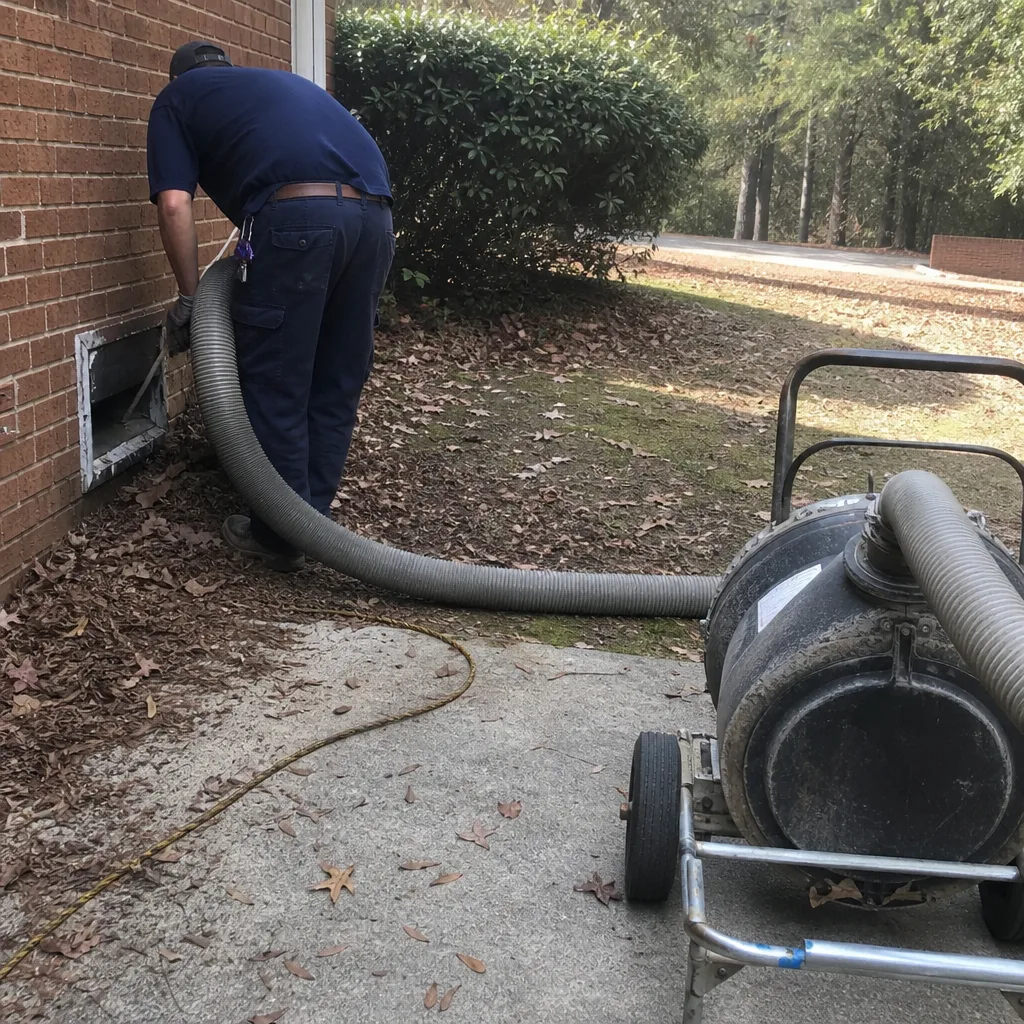 Before
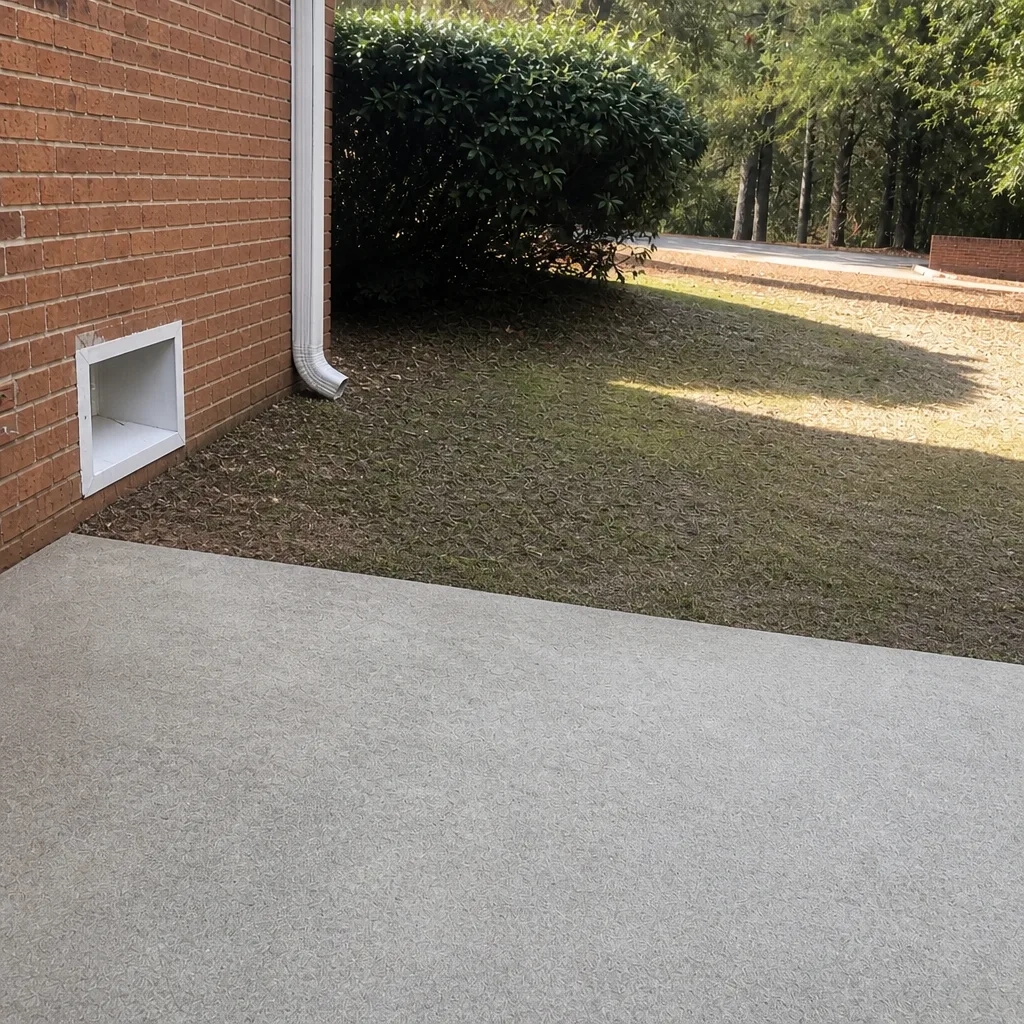 After
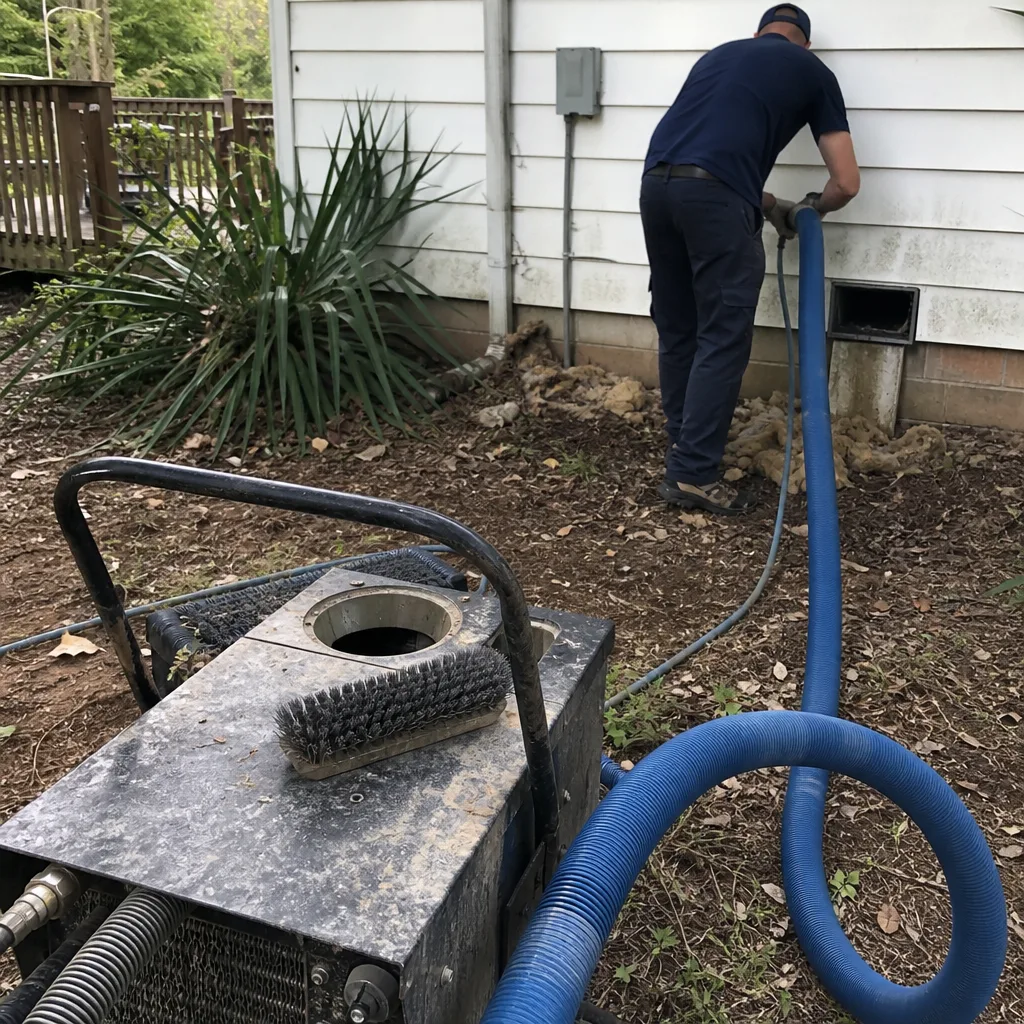 Before
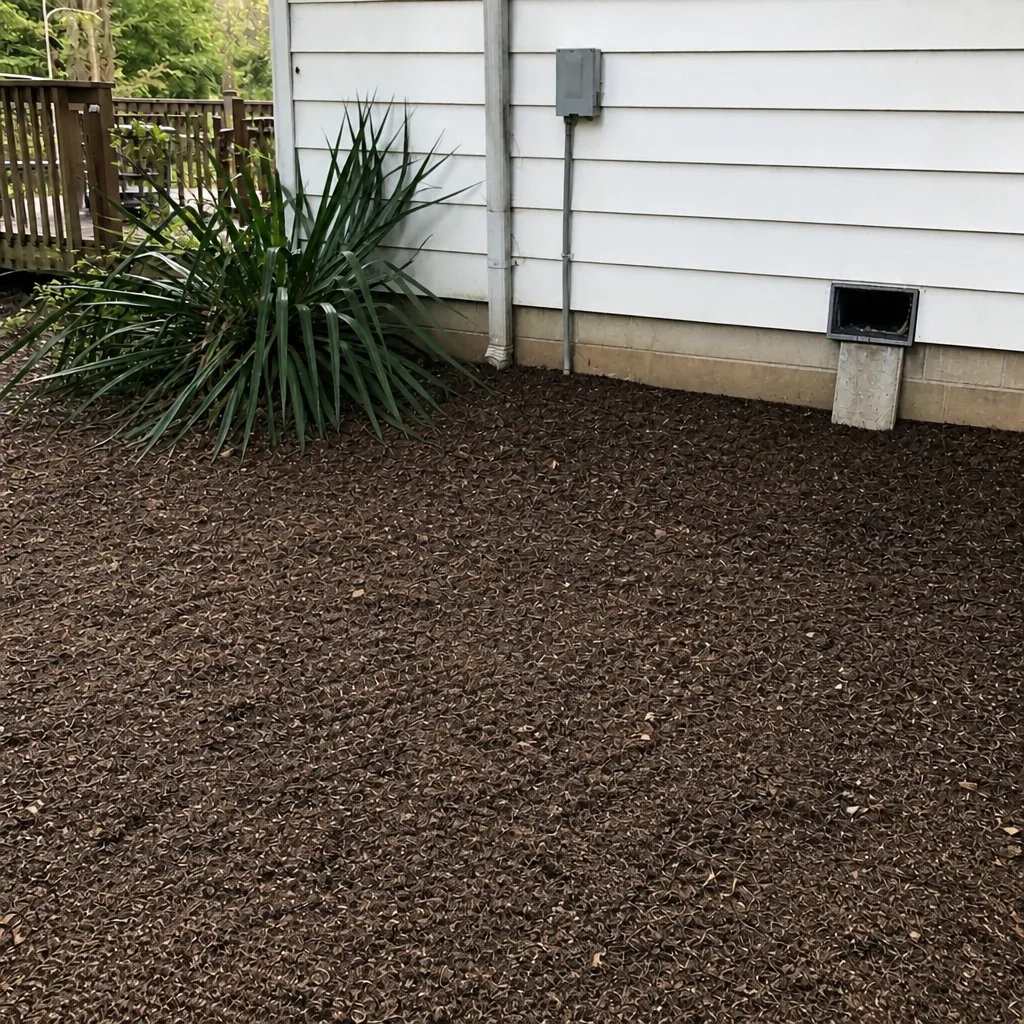 After
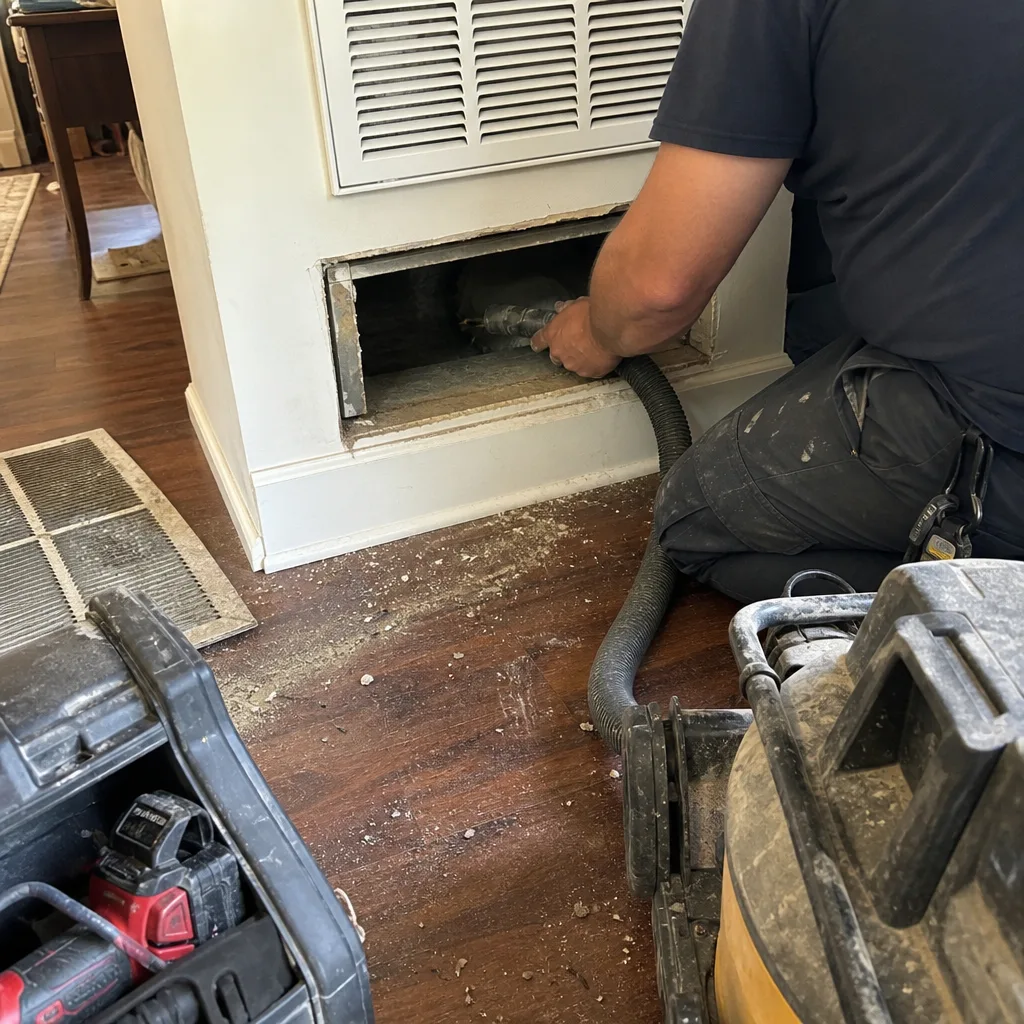 Before
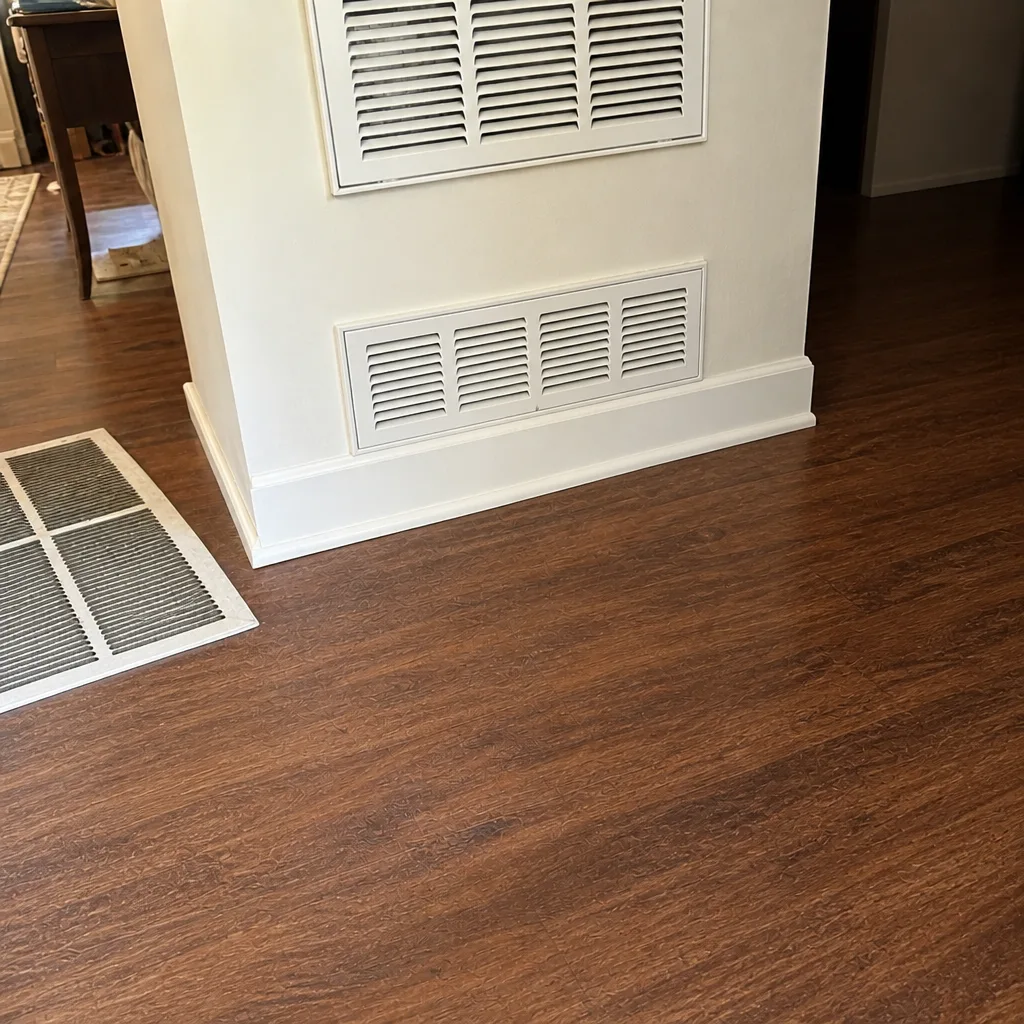 After
When to Call a Professional
Some signs point clearly to professional work, and a few of them are safety issues rather than comfort issues. Call a qualified professional if you notice visible mold growth inside a register or on duct surfaces, if a musty odor returns every time the system runs, or if you’ve had a pest issue in the ductwork. Recent renovation is another trigger, since drywall dust and construction particulate settle into trunk lines during the project. Households with asthma or allergy concerns, or anyone who sees dust settling unusually fast after cleaning, should get a professional assessment rather than trying to manage it with consumer tools. And if a duct run has come apart or a flex section is crushed, that’s repair work, not cleaning.
Wakefield Air Duct Cleaning Pros offers free estimates in Wakefield. Call (866) 947-9162. We answer 24/7. Fast dispatch from 7am to 7pm, Sunday through Friday.
Frequently Asked Questions
Pricing in Wakefield depends on the size and layout of the system, the duct material, and whether the air handler and blower are included in the scope. Because the profile of what’s inside the ducts varies so much between newer construction and older retrofits, we set one flat price per system after inspecting it, agreed before any work starts. There’s no per-vent pricing and no teaser rate that grows once a technician is on site. Call (866) 947-9162 for an exact quote. Estimates are free.
Cheap quotes usually describe a smaller job. A low figure typically covers a contact-only pass at the register faces without negative air pressure, mechanical agitation, or air handler cleaning, which is the fastest way to make a number look attractive. It doesn’t remove the debris in the trunk lines, and it can stir particulate into the living space. When you compare quotes, compare the scope line by line, not just the total. Call (866) 947-9162 for a scope you can compare against the others.
Ask for before-and-after photographs of your own system’s duct interiors and the collection unit, plus a written report listing which components were cleaned. That combination is what proves the job, and it’s what we provide on every Wakefield job. A receipt with a checked box doesn’t tell you what came out of the ducts. Call (866) 947-9162 to book a cleaning with full documentation.
There’s no universal interval, and anyone who gives you one without inspecting your system is guessing. Households with pets, allergy or asthma concerns, recent renovations, or a system that runs hard through humid summers generally need it more often than homes with a well-sealed system and a properly maintained filter. The right schedule comes from the condition of your ducts and a baseline record from the first cleaning. Call (866) 947-9162 and we’ll assess your system before recommending anything.
Yes, and for a specific reason. Construction generates fine drywall dust and joint compound particulate that settles into trunk lines before the system ever runs a full season. That material is light enough to be stirred back into the air supply by the blower, and it’s exactly the kind of debris a whole-system cleaning with HEPA containment removes. Newer homes often need containment more than aggressive agitation. Call (866) 947-9162 to schedule an inspection.
We include the air handler cabinet, blower wheel, and drain pan area as part of a full-system scope. Cleaning the ducts alone leaves a dust-caked blower and cabinet interior that re-contaminates the supply side the moment the system runs. The full air pathway from return intake to supply register is the standard we work to. Call (866) 947-9162 for a free estimate on the complete scope.
The Bottom Line
Duct cleaning done properly is a system-wide process, not an event at the vent face. It starts with an audit of what’s actually inside the ducts, uses negative air pressure and mechanical agitation to remove it without releasing it into your home, covers the air handler and blower as part of the same scope, and documents the result with photos and a written report. In Wakefield, the right scope depends on whether your home is newer construction or an older retrofit, and cleaning without sealing leaves the system open to re-contamination. Establish a baseline on the first job and you’ll never have to guess about the next one.
Call (866) 947-9162 for a free estimate. We answer 24/7. Fast dispatch from 7am to 7pm, Sunday through Friday.
Written by the team at Wakefield Air Duct Cleaning Pros.